

Ancient Egyptian Food: A Fascinating Glimpse into the Culinary World of the Pharaohs
Ancient Egyptian food was far more than sustenance—it was a reflection of culture, social class, religion, and geography. The fertile banks of the Nile River nourished a civilization whose diet shaped both daily life and spirituality. From humble peasants to mighty pharaohs, food united Egypt’s people through shared ingredients and timeless traditions. Archaeological findings, temple carvings, and preserved offerings in tombs reveal how deeply food was woven into their worldview. Meals were not only practical but symbolic—offered to gods and used in rituals to ensure prosperity in this life and the afterlife.
The Egyptian table was simple yet abundant, grounded in grains, vegetables, and fruits, with occasional meat or fish. Beer and bread stood at its heart, representing life and vitality. These staples sustained workers who built monumental wonders such as the Giza Pyramids. Meanwhile, the elite indulged in refined dishes and imported delicacies. The art of food preparation also developed early, with evidence of sophisticated ovens, baking techniques, and brewing systems.
Exploring ancient Egyptian food today provides more than historical curiosity—it’s a journey through flavor, innovation, and cultural evolution. The same fertile soil that birthed civilization still feeds Egypt today, linking modern cuisine with its ancient roots. Understanding what ancient Egyptians ate offers a deeper appreciation of their resilience and ingenuity. Let’s dive into their culinary world and uncover the secrets behind the diet that sustained one of history’s most extraordinary empires.
The Foundation of Ancient Egyptian Diet: Bread and Beer
At the core of ancient Egyptian food were two inseparable staples—bread and beer. Barley and emmer wheat, cultivated in the Nile’s rich floodplains, formed the backbone of Egyptian nutrition. Bread was baked daily in communal ovens, often coarse in texture and flavored with honey, dates, or herbs. Archaeologists have uncovered loaves buried with mummies, symbolizing eternal sustenance for the afterlife. These breads varied in shape and recipe, from flat loaves to conical cakes reserved for rituals.
Beer, brewed from barley, served as both refreshment and nourishment. Thick, sweet, and cloudy, it provided calories and essential nutrients, making it a vital beverage for laborers and elites alike. Workers constructing temples and tombs received daily rations of bread and beer, a combination that sustained the workforce powering Egypt’s grand civilization. This duo embodied stability, abundance, and divine favor, tying everyday life to spiritual belief.
Vegetables: The Versatile Core of Daily Meals
Vegetables played a crucial role in ancient Egyptian food, balancing the heavy grain-based diet. Onions, garlic, leeks, and lettuce were everyday essentials. These ingredients were not just consumed but also offered to gods during religious festivals. Lentils, chickpeas, and beans provided valuable protein, while cucumbers and radishes added freshness during the hot season. Egyptians cultivated these crops in small gardens near their homes or temple grounds, irrigated by channels drawn from the Nile.
Lettuce held particular importance, associated with fertility and the god Min. Garlic and onions were believed to have protective properties, so priests often abstained from them during purification rituals. Yet, these same vegetables provided flavor, health benefits, and variety in an otherwise modest diet. Their enduring presence in modern Egyptian cuisine shows how ancient diets continue to influence contemporary tastes.
Fruits: Nature’s Sweet Treats of the Nile
Fruits in ancient Egyptian food provided sweetness and nutrition. Dates, figs, and pomegranates were the favorites, enjoyed fresh or dried for preservation. Grapes were cultivated in abundance, often fermented into wine for the upper classes. Melons and sycamore figs refreshed the populace during scorching summers. Honey, a prized luxury, was used as a natural sweetener in desserts and religious offerings.
Fruits were symbols of fertility, life, and divine favor. Tomb paintings frequently depicted baskets of figs and dates, illustrating their eternal value. Importantly, fruit cultivation reflected Egypt’s trade connections—some varieties like pomegranates and olives arrived through exchanges with the Mediterranean world. These fruits highlighted how Egypt’s prosperity depended as much on agriculture as on diplomacy and exploration.
Protein in Ancient Egyptian Cuisine: Fish, Meat, and Fowl
Although the majority of Egyptians relied on a plant-based diet, fish and meat had a place in ancient Egyptian food culture. The Nile teemed with species like tilapia and catfish, caught using nets and hooks. Fish was either grilled fresh or dried and salted for preservation. Lower classes consumed it regularly, while wealthier Egyptians preferred fowl and red meat.
Fish and River Delicacies
Fish was a cornerstone protein, accessible and plentiful. Excavations reveal fish bones in workers’ settlements, proving its common use. Certain species, however, held sacred status and were avoided in specific regions. Nile perch and mullet were popular for their taste and nutritional value. Fishermen used boats crafted from papyrus reeds, reflecting Egypt’s mastery of river life.
Meat and Poultry: A Luxury for the Elite
Meat consumption distinguished social rank in ancient Egyptian food traditions. Beef, goat, and mutton were reserved for special occasions or religious ceremonies. Ducks, geese, and pigeons were delicacies often depicted in banquet scenes. Wealthy Egyptians enjoyed roasted or stewed meats seasoned with herbs and honey. The less fortunate substituted with fish or legumes, yet festive periods often granted them rare access to meat during community celebrations.
Dairy Products: A Subtle Yet Vital Addition
Milk, butter, and cheese were valuable sources of nourishment. Cattle, goats, and sheep supplied dairy products primarily for children and the elderly. Evidence from tomb art suggests that cheese-making was a well-established craft, producing soft and hard varieties. Though not as central as bread or beer, dairy contributed texture, flavor, and variety to the Egyptian diet.
Seasoning and Flavor in Ancient Egyptian Food
Ancient Egyptians mastered the art of flavor long before modern spices became available. Salt, coriander, cumin, and fennel were widely used to enhance food. Herbs like dill and mint added freshness, while honey and dates introduced natural sweetness. The blending of herbs and oils created distinctive aromas that transformed simple ingredients into flavorful meals.
Salt also played a crucial role in preservation, enabling Egyptians to store fish and meat for long journeys or seasonal shortages. Vinegar and fermented sauces added tang, showing an early understanding of fermentation. Cooking oils, extracted from sesame or castor seeds, provided cooking mediums and dressings. The creative use of local ingredients reflected both necessity and innovation in Egyptian kitchens.
Cooking Techniques and Utensils
Ancient Egyptian food preparation relied on sophisticated tools and methods. Clay ovens, grinding stones, and copper knives were common in households. Women, often the primary cooks, prepared meals in open courtyards. Bread baking was an art, requiring skill to achieve the right texture. Stewing, roasting, and boiling were typical techniques, producing hearty and aromatic dishes.
Archaeological findings show that kitchens were compact but efficient. Pottery vessels preserved stews, while reed baskets stored grain. Egyptians valued hygiene, washing ingredients with Nile water before cooking. The organization of their kitchens reveals not just culinary skill but also social structure, where food preparation held both domestic and communal significance.
Social and Religious Dimensions of Ancient Egyptian Food
Food in ancient Egypt carried deep symbolic meaning. Offerings of bread, beer, fruits, and fowl were central to temple rituals. Priests prepared meals for the gods, ensuring cosmic balance and divine favor. Tombs of nobles and pharaohs contained models of servants preparing food, symbolizing eternal supply in the afterlife.
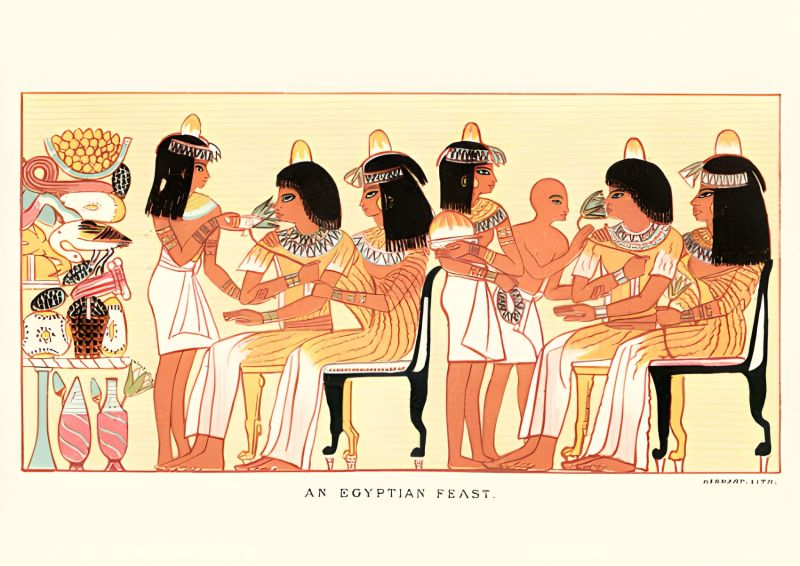
Feasts were integral to festivals, marking agricultural cycles and honoring deities. During harvest celebrations, farmers shared meals with families and neighbors, reinforcing social bonds. Even in death, Egyptians believed nourishment was eternal—depictions on tomb walls showed banquets meant to accompany souls on their journey. This spiritual link between food and immortality underscores how sustenance transcended the physical world.
Trade and Imported Delicacies
Trade expanded the Egyptian palate, introducing new flavors and ingredients. From the Levant and Nubia came spices, olive oil, dates, and wine. These imports reflected Egypt’s wealth and influence across regions. Such luxuries were reserved for the elite, who savored exotic tastes as symbols of status and sophistication.
Artifacts discovered in royal tombs—like amphorae filled with imported wine—demonstrate how global exchange shaped culinary evolution. This interaction influenced both cuisine and culture, laying the foundation for Egypt’s enduring gastronomic legacy.
Legacy of Ancient Egyptian Food in Modern Cuisine
Modern Egyptian dishes still echo ancient traditions. Meals like ful medames, lentil stews, and freshly baked bread trace their lineage to pharaonic recipes. Even desserts like those featured in Desserts of Egypt carry echoes of ancient sweetness derived from honey and dates. Culinary heritage remains a bridge between past and present, sustaining Egypt’s cultural identity for millennia.
Travelers exploring Egypt today often seek authentic flavors that mirror ancient simplicity. Understanding food history enhances appreciation for local dining experiences, as described in Traditional Dishes in Egypt. The same principles of balance, freshness, and nourishment that guided ancient cooks continue to define Egyptian kitchens today.
FAQs about Ancient Egyptian Food
What did most ancient Egyptians eat daily?
Most ancient Egyptians consumed bread, beer, vegetables, and occasionally fish. Their diet revolved around barley and emmer wheat, complemented by onions, garlic, beans, and lentils. Meat was rare for commoners but more common during festivals or special events.
Did ancient Egyptians eat meat regularly?
No, meat was typically reserved for the wealthy or for religious ceremonies. Common people ate fish or plant-based protein. Meat from cattle, goats, and poultry was available primarily during celebrations or temple offerings.
What beverages were popular in ancient Egyptian culture?
Beer was the staple beverage, consumed by all classes. It was thick, mildly alcoholic, and nutritious. The elite also enjoyed wine, often imported from regions like Palestine and produced locally in royal estates.
How did ancient Egyptians preserve their food?
They used drying, salting, and fermenting techniques. Fish and meat were salted and sun-dried, while grains and dried fruits were stored in cool clay jars. These methods helped maintain food supplies year-round.
Is modern Egyptian cuisine influenced by ancient recipes?
Absolutely. Many modern Egyptian dishes still reflect ancient traditions. Lentil stews, flatbreads, and date-based desserts all trace their origins to ancient Egypt’s kitchens. The emphasis on fresh, locally sourced ingredients remains unchanged through time.