

Pyramids You’ve Never Heard Of in Egypt: Hidden Wonders Beyond Giza
When people picture the pyramids of Egypt, the iconic trio at Giza immediately come to mind — colossal, majestic, and world-famous. Yet, scattered across Egypt’s golden sands lie dozens of lesser-known pyramids that whisper untold stories of forgotten pharaohs, experimental architecture, and ancient mysteries still being unraveled. These hidden pyramids, though overshadowed by their grander cousins, hold keys to understanding Egypt’s evolution from the early dynasties to the twilight of its pyramid-building era. Their weathered stones, some half-buried in sand, stand as silent witnesses to innovations, political shifts, and religious transformations that shaped the world’s first great civilization.
Exploring these pyramids is like peeling back history layer by layer, revealing the creative spirit of builders long before the perfection achieved in Giza. From the remote desert ridge of **Abu Sir** to the mysterious ruins at **El-Lahun**, these lesser-known marvels remain largely off the beaten path. For travelers seeking authentic experiences away from crowded tourist sites, these pyramids offer untouched wonder and archaeological intrigue. Many adventure seekers combine visits to these enigmatic landmarks with Giza Excursions or relaxing Egypt Nile Cruises, creating journeys that merge discovery with timeless Nile beauty.
The Forgotten Pyramid of Abu Rawash: Egypt’s Lost Apex
Just a few kilometers north of the Giza Plateau lies Abu Rawash, home to the ruins of what was once the northernmost pyramid in Egypt. This site, often overlooked by travelers, belonged to Pharaoh Djedefre, the son of King Khufu, builder of the Great Pyramid. The Abu Rawash Pyramid may appear as rubble now, but in its prime, it rivaled Giza’s grandeur. Archaeologists suggest it once rose nearly 67 meters, constructed from fine limestone and red granite. Its destruction likely came from later quarrying during the Roman era. What makes this pyramid remarkable is the evidence of architectural experimentation — a mix of traditional pyramid design and new engineering approaches that marked a transitional phase in ancient Egyptian construction genius.
The Step Pyramid of Sekhemkhet: Saqqara’s Hidden Twin
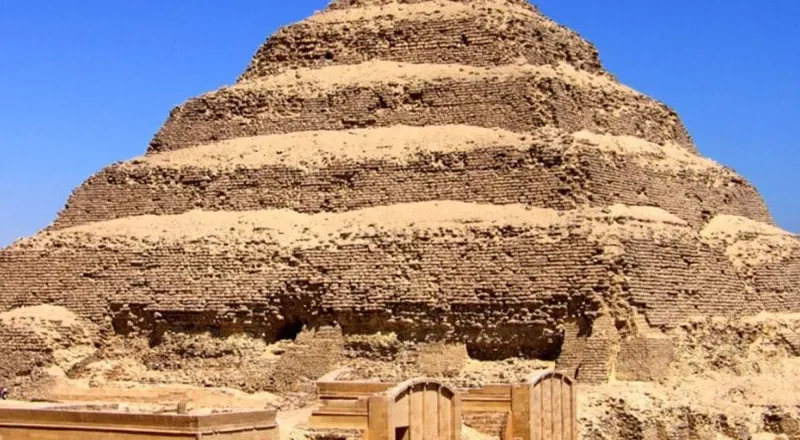
Buried beneath the sands of Saqqara lies another gem — the unfinished pyramid of Pharaoh Sekhemkhet, successor of Djoser, whose Step Pyramid revolutionized architecture. Dubbed “The Buried Pyramid,” Sekhemkhet’s monument was discovered in 1951, still sealed since ancient times. Its underground complex includes corridors, alabaster sarcophagi, and storage chambers hinting at a royal burial that never occurred. The site’s completion was interrupted, possibly by the pharaoh’s short reign. Although less imposing than other pyramids, it vividly illustrates Egypt’s experimental age, bridging the gap between mastaba tombs and the true pyramids that followed.
The Pyramid of Lahun: A Masterpiece of Engineering in Fayoum
Located near the Fayoum Oasis, the Pyramid of Lahun, built by Pharaoh Senusret II of the 12th Dynasty, is an underappreciated marvel of Middle Kingdom ingenuity. What sets Lahun apart is its revolutionary internal structure — the entrance lies hidden on the pyramid’s side rather than at its base, a tactic designed to thwart tomb robbers. Inside, the intricate network of tunnels displays a precision unmatched in its era. The nearby workers’ village provides rare insights into ancient Egyptian labor organization and daily life. Visitors often combine a trip to Lahun with Cairo Day Tours for a balanced experience of history and urban exploration.
The Pyramid of Hawara: The Labyrinth of Amenemhat III
Another overlooked wonder of the Fayoum region, the Pyramid of Hawara, built by Amenemhat III, is notorious for its legendary labyrinth described by Herodotus. Though much of it has collapsed, excavations revealed a vast mortuary temple once containing countless corridors and chambers — so complex that ancient travelers claimed no one could find the exit unaided. Beneath its sands lies a sarcophagus of quartzite weighing over 100 tons. This pyramid marks the culmination of Middle Kingdom craftsmanship, illustrating the fusion of monumental art with advanced mathematics and astronomy. It remains a must-see for those charting the full evolution of Egypt’s pyramid construction.
El-Kurru and Nuri: Nubian Influence on Egyptian Pyramid Culture
Far south in Nubia, near modern Sudan, stand the pyramids of El-Kurru and Nuri — testaments to Egypt’s expansive cultural reach during the 25th Dynasty. Built by Kushite pharaohs such as Taharqa and Piye, these pyramids display a distinct architectural flair with steeper angles and smaller bases, echoing ancient Egyptian traditions but infused with African innovation. Their interiors feature vivid carvings, funerary texts, and celestial motifs that blend Egyptian and Nubian spiritual ideologies. Modern explorers embarking on Egypt Desert Trips find these sites awe-inspiring for their isolation and authenticity — a living museum untouched by mass tourism.
The Pyramid of Unas: The Birthplace of Pyramid Texts
Hidden at the southern edge of Saqqara lies the modest yet profoundly significant Pyramid of Unas. Though small and eroded on the outside, its interior houses the world’s earliest known Pyramid Texts — sacred hieroglyphic spells designed to guide the pharaoh’s soul to the afterlife. These inscriptions later evolved into the Book of the Dead, one of ancient Egypt’s most influential religious works. The Pyramid of Unas marks a pivotal shift in Egyptian spirituality, offering the first tangible evidence of written theology that would shape millennia of belief and ritual.
The Bent Pyramid of Dahshur: Engineering on the Edge
The Bent Pyramid of Dahshur stands as a symbol of ambition meeting reality. Constructed for Pharaoh Sneferu, this pyramid was an early attempt at achieving the perfect smooth-sided form. Midway through construction, the architects realized the angle was too steep, forcing a visible change that gives the pyramid its distinctive “bent” shape. Despite the flaw, it remains one of Egypt’s most visually unique structures and one of the best-preserved from the Old Kingdom. Nearby lies Sneferu’s Red Pyramid — the first successful true pyramid — making Dahshur a living laboratory of ancient innovation.
The Pyramid Fields of Abusir: The Bridge Between Giza and Saqqara
Tucked between the famous Giza Plateau and Saqqara lies the lesser-known necropolis of Abusir Pyramids. This site served as the royal cemetery for the 5th Dynasty and includes the pyramids of Sahure, Neferirkare, and Niuserre. While smaller than Giza’s giants, these pyramids introduced key religious developments, particularly the rise of solar temples dedicated to the Sun God Ra. Their reliefs portray scenes of daily life, naval expeditions, and divine offerings — invaluable for understanding Egypt’s sociopolitical transformation during the Old Kingdom. For archaeology lovers, Abusir offers serenity, history, and a rare chance to explore monuments free from tourist crowds.
Why You Should Explore Egypt’s Lesser-Known Pyramids
These hidden pyramids aren’t just relics — they’re revelations. They trace the trial-and-error, the faith, and the sheer human determination that birthed one of history’s greatest civilizations. Visiting them allows travelers to move beyond the postcard image of Giza and connect with Egypt on a deeper, more intimate level. Whether paired with Luxury Egypt Tours or a Private Egypt Tour Package, these sites enrich every journey with authenticity and wonder. Each pyramid tells a story not only of kings and gods but of the extraordinary vision that shaped humanity’s architectural destiny.
FAQs About Pyramids You’ve Never Heard Of in Egypt
How many pyramids are there in Egypt beyond Giza?
Egypt boasts over 100 pyramids, though only a handful gain global attention. Sites like Dahshur, Saqqara, Lahun, and Abusir contain dozens of lesser-known pyramids, many predating or following the Giza constructions.
Which lesser-known pyramid is the oldest in Egypt?
The Step Pyramid of Djoser at Saqqara is the oldest, but the unfinished pyramid of Sekhemkhet — often called its twin — was constructed shortly afterward, making it one of Egypt’s earliest architectural experiments.
Can tourists visit the hidden pyramids of Egypt?
Yes, many are accessible through guided tours or organized Egypt Day Tours. Sites like Dahshur and Saqqara are open to visitors and less crowded, offering tranquil exploration experiences.
What’s unique about the Pyramid of Lahun?
The Lahun Pyramid’s side entrance and intricate tunnel systems distinguish it from others. It also preserves evidence of an ancient workers’ settlement, providing insights into life during the Middle Kingdom.
Why did Egyptians stop building pyramids?
Pyramid construction declined after the Middle Kingdom due to economic cost, political instability, and evolving religious beliefs emphasizing temple burials over monumental tombs. Later pharaohs favored rock-cut tombs, such as those in the Valley of the Kings.