

A Guide to Egypt’s Most Important Coptic Monasteries: Sacred Desert Sanctuaries of Faith and History
Egypt’s spiritual heritage stretches far beyond the famous pyramids and pharaonic temples. Hidden among desert valleys, mountain ranges, and quiet oases stand some of the world’s oldest Christian monasteries. These sacred places form the heart of Egyptian Christian history and remain active centers of worship, prayer, and monastic life today. Exploring Egypt’s most important Coptic monasteries reveals a powerful story of faith, resilience, and centuries-old traditions preserved in the desert landscapes of Egypt.
Visitors who travel through Egypt quickly discover that Coptic monasteries are not simply historical monuments. They are living spiritual communities where monks continue ancient practices that date back to the earliest centuries of Christianity. Many travelers include these sacred destinations within broader journeys organized through Egypt Travel Packages, allowing them to explore both Egypt’s ancient heritage and its deeply rooted Christian traditions.
The rise of monasticism began in Egypt during the third and fourth centuries when early Christian ascetics retreated into the deserts to live lives of prayer, solitude, and devotion. Their example inspired thousands to follow, leading to the establishment of monasteries that would influence Christian communities across the world. Today, these monasteries remain among the most significant religious sites in Egypt and are frequently included in spiritual itineraries and Egypt Day Tours focused on religious heritage.
Many of these sacred locations are linked to the route of the Holy Family during their journey through Egypt. Travelers seeking to explore these spiritual landmarks often join specialized pilgrimage itineraries such as Holy Family Trips, which trace the path believed to have been taken by the Virgin Mary, Joseph, and the infant Jesus.
This guide explores Egypt’s most important Coptic monasteries, revealing the spiritual significance, architectural beauty, and historical legacy of these extraordinary religious sanctuaries.
The Origins of Monastic Life in Egypt
The roots of Christian monasticism can be traced directly to the deserts of Egypt. In the third century, Saint Anthony the Great withdrew into the Eastern Desert seeking a life of solitude and devotion. His example inspired others to adopt similar lifestyles, eventually forming organized monastic communities that would become the foundations of Christian monastic traditions worldwide.
Egypt’s deserts proved to be the perfect environment for spiritual contemplation. The vast silence, isolation, and stark beauty allowed monks to focus entirely on prayer, meditation, and spiritual discipline. Over time, these small hermit communities evolved into fortified monasteries that provided protection against desert raiders while allowing monks to live together in prayerful communities.
Today, many travelers interested in religious history include these sacred destinations in cultural itineraries alongside historic cities and monuments. Programs offered by Egypt Travel Guide itineraries often highlight these spiritual landmarks as essential components of Egypt’s diverse cultural identity.
Wadi El Natrun: The Heart of Coptic Monasticism
Among the most significant centers of Christian monastic life in Egypt is the desert region of Wadi El Natrun. Located between Cairo and Alexandria, this valley has been a spiritual center for Christian monks since the fourth century. Historically known as Scetis, the region once hosted hundreds of monasteries and thousands of monks devoted to prayer and spiritual study.
Today, four major monasteries remain active in Wadi El Natrun, each preserving centuries of religious traditions. These monasteries are not only places of worship but also centers of manuscript preservation, iconography, and theological scholarship. Visitors exploring Wadi El Natrun often describe a profound sense of peace as they walk through ancient stone walls and quiet courtyards surrounded by desert silence.
The Monastery of Saint Macarius
The Monastery of Saint Macarius stands as one of the most historically significant Coptic monasteries in Egypt. Founded in the fourth century by Saint Macarius the Great, this monastery has played a central role in shaping Christian monastic traditions. Over the centuries, it became home to prominent religious scholars and spiritual leaders whose teachings influenced Christian theology throughout the world.
The monastery contains ancient churches, libraries filled with rare manuscripts, and beautifully preserved icons that reflect centuries of artistic devotion. Despite its long history, the monastery remains an active religious community where monks continue daily rituals of prayer, contemplation, and manual labor.
The Monastery of Saint Bishoy
Another major monastery within Wadi El Natrun is the Monastery of Saint Bishoy, named after a revered Coptic saint known for his humility and devotion. The monastery is famous for its well-preserved fortress walls, ancient chapels, and the relics of Saint Bishoy himself.
Visitors are often captivated by the monastery’s simple architecture, which reflects traditional desert monastic design. Thick stone walls, narrow passageways, and quiet courtyards create a peaceful environment that encourages reflection and spiritual contemplation.
The Monastery of Saint Catherine in Sinai
Among Egypt’s most famous Christian sites is the legendary Monastery of Saint Catherine. Located at the foot of Mount Sinai, this monastery is one of the oldest continuously operating Christian monasteries in the world.
Built during the reign of Byzantine Emperor Justinian in the sixth century, the monastery has survived invasions, political upheavals, and centuries of change while preserving an extraordinary collection of religious artifacts. Its library holds one of the largest collections of ancient manuscripts in the world, second only to the Vatican.
The monastery also houses the famous Burning Bush, believed by tradition to be the location where Moses encountered the divine presence described in the biblical story. Pilgrims and travelers alike consider the monastery a sacred destination filled with spiritual significance and breathtaking mountain scenery.
The Spiritual Journey to Saint Catherine Mountain
Many visitors to the monastery also climb nearby Saint Catherine Mountain, Egypt’s highest peak. The journey to the summit is often undertaken before sunrise, allowing pilgrims to witness spectacular views across the Sinai desert.
This spiritual climb reflects centuries-old pilgrimage traditions that combine physical endurance with spiritual reflection. The breathtaking landscape surrounding the monastery adds to the profound sense of history and sacredness experienced by visitors.
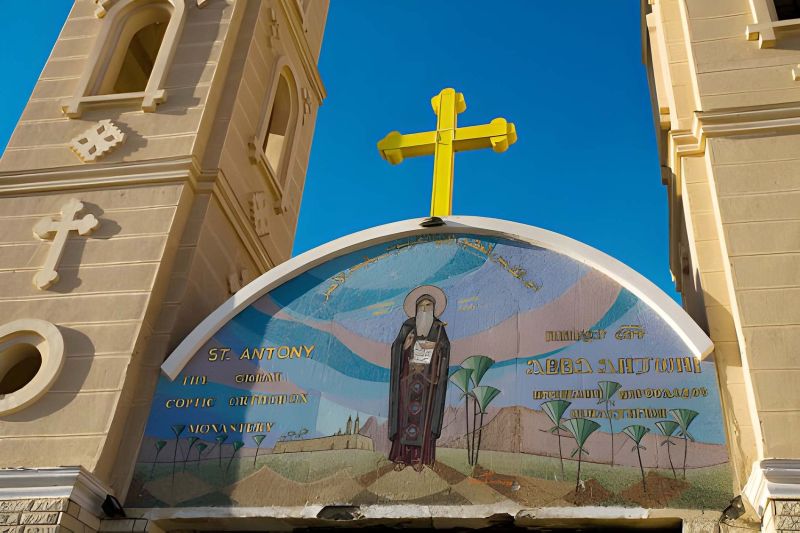
The Monastery of Saint Anthony
Deep within Egypt’s Eastern Desert lies the Monastery of Saint Anthony, widely regarded as the birthplace of Christian monasticism. Founded in the fourth century near the cave where Saint Anthony lived as a hermit, the monastery has been a center of spiritual life for more than 1,600 years.
The complex includes ancient churches, defensive towers, and beautifully restored wall paintings depicting biblical scenes and early Christian saints. Monks at the monastery continue to follow traditional monastic practices including prayer, fasting, and manual work.
Travelers interested in exploring these remarkable religious landmarks often combine their visit with cultural experiences across Egypt through customized itineraries such as Private Egypt Tours, which allow greater flexibility when exploring remote monasteries.
The Monastery of Saint Paul the Anchorite
Not far from the Monastery of Saint Anthony stands the Monastery of Saint Paul the Anchorite, dedicated to one of Christianity’s earliest hermits. Saint Paul is traditionally considered the first Christian hermit, having retreated into the desert during Roman persecutions.
The monastery contains several historic churches, ancient manuscripts, and underground springs that have sustained monastic life for centuries. Its remote location among rugged desert mountains adds to its sense of sacred isolation and spiritual significance.
These desert monasteries remain living examples of faith that has endured for nearly two millennia. Many travelers exploring religious heritage in Egypt combine these sites with cultural experiences such as visits to Cairo Religious Tour programs that highlight the diverse spiritual traditions of Egypt.
The Cultural Importance of Coptic Monasteries
Egypt’s Coptic monasteries serve not only as religious centers but also as guardians of cultural and historical knowledge. Many monasteries maintain libraries filled with ancient manuscripts written in Greek, Coptic, Arabic, and Syriac. These texts provide invaluable insights into early Christian theology, philosophy, and history.
The monasteries also preserve traditional art forms including icon painting, calligraphy, and manuscript illumination. These artistic traditions have been passed down through generations of monks and remain vital expressions of Coptic identity today.
For travelers seeking authentic cultural experiences, exploring these monasteries offers a unique perspective on Egypt beyond the famous temples and pyramids often highlighted in guides such as Hidden Gems in Egypt.
FAQs About Egypt’s Most Important Coptic Monasteries
What is the oldest monastery in Egypt?
The Monastery of Saint Anthony is widely considered the oldest monastery in Egypt and one of the earliest Christian monastic communities in the world. Founded in the fourth century, it has remained continuously active for over 1,600 years.
Where are the most famous Coptic monasteries located?
Egypt’s most famous monasteries are located in Wadi El Natrun, the Eastern Desert near the Red Sea, and the Sinai Peninsula. These regions became centers of monastic life due to their remote desert landscapes that supported spiritual isolation and contemplation.
Can tourists visit Coptic monasteries in Egypt?
Yes, many monasteries welcome visitors who wish to learn about Coptic Christianity and monastic traditions. Visitors are usually asked to dress modestly and respect the spiritual atmosphere of these sacred communities.
Why are Egyptian monasteries important to Christian history?
Egyptian monasteries played a critical role in the development of Christian monasticism. The spiritual teachings and practices developed by Egyptian monks influenced Christian communities throughout Europe, the Middle East, and beyond.
What is the best time to visit monasteries in Egypt?
The cooler months between October and April are generally considered the best time to visit monasteries in Egypt. During this period, desert temperatures are more comfortable for travel and exploration.