

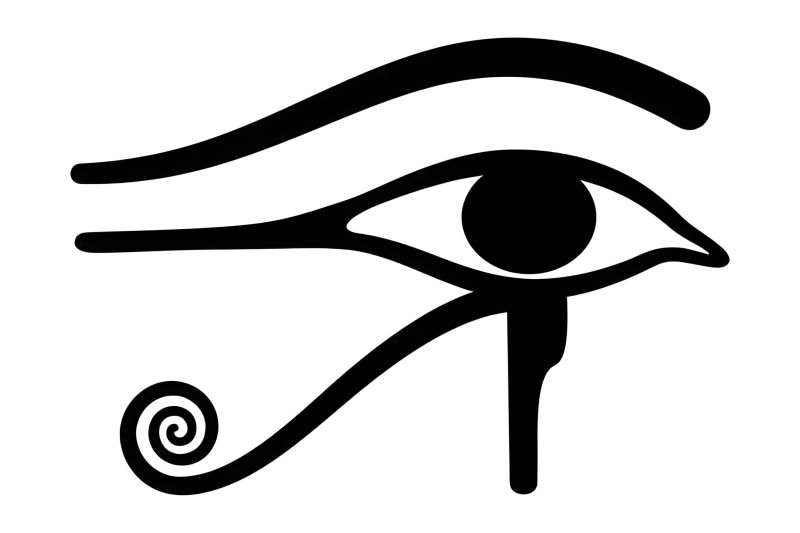
Egyptian Eye of Horus – Symbol of Protection, Power, and Eternal Wisdom
The Egyptian Eye of Horus stands among the most iconic, mystical, and enduring symbols of ancient Egyptian mythology. Known as 'Wadjet' in the native tongue, this sacred emblem represents healing, protection, and divine perception. The Eye of Horus wasn’t merely a decorative symbol; it played a vital role in the spiritual and daily lives of Egyptians for millennia. Its presence adorned tombs, jewelry, amulets, ships, and temple walls, believed to safeguard both the living and the dead. The symbol’s roots intertwine with mythic tales of gods, cosmic balance, and resurrection—concepts deeply cherished in the ancient culture along the Nile River.
To grasp the profound significance of the Eye of Horus, one must delve into Egypt’s mythological tapestry. The story centers on the sky god Horus, son of Isis and Osiris, who battled his uncle Set to avenge his father’s death. During their fierce struggle, Horus lost his eye, later restored by the wise god Thoth. This mythic healing transformed the eye into a divine emblem of restoration and completeness—a concept that became a cornerstone of Egyptian spiritual belief. The powerful imagery of the Eye of Horus still resonates today, influencing art, jewelry, tattoos, and even modern pop culture.
Interestingly, travelers exploring Egypt’s ancient temples—like those at Luxor Temple or Philae Temple—can still witness countless carvings of this symbol, reaffirming its omnipresence in religious art. Whether you’re enchanted by mythology or fascinated by Ancient Egypt, the Eye of Horus embodies the timeless allure of one of the world’s greatest civilizations.
The Mythological Origins of the Eye of Horus
The legend of the Eye of Horus begins with divine conflict and celestial revenge. Horus, the falcon-headed god of the sky, sought to avenge the murder of his father, Osiris, who was slain by his jealous brother Set. Their battle symbolized the eternal struggle between order and chaos—a theme central to Egyptian cosmology. During the fierce encounter, Set tore out Horus’s left eye and shattered it into pieces. The wise god Thoth, associated with writing and magic, meticulously reassembled the fragments, restoring Horus’s vision. This symbolic act embodied restoration, healing, and wholeness.
Each part of the reconstructed eye represented a fraction of power and perception. Ancient mathematicians even used these segments as a fractional system for measuring ingredients in rituals and medicine. Thus, the Eye of Horus became a bridge linking mythology, mathematics, and spirituality. From temple inscriptions to papyrus scrolls, the eye’s imagery represented harmony restored through divine wisdom. Students of Egyptian hieroglyphics recognize the symbol as both sacred script and protection charm, revealing how seamlessly religion and daily life intertwined.
Symbolic Interpretation of Each Part of the Eye
The Eye of Horus is more than just an abstract drawing—it’s a mathematically precise and spiritually loaded symbol. Ancient Egyptians divided it into six parts, each representing a human sense and a corresponding fraction. The eyebrow symbolized thought, the pupil represented sight, the right side stood for smell, the left side for hearing, the curved line below indicated taste, and the tear-shaped element symbolized touch. Collectively, these parts embodied the complete perception of the world—a reflection of harmony between body and spirit.
Beyond sensory symbolism, the eye also reflected the Egyptians’ profound understanding of balance. Horus’s right eye represented the sun and masculine energy, while the left—later known as the Eye of Thoth—represented the moon and feminine energy. This duality mirrored their cosmology, where light and darkness coexisted in eternal equilibrium.
The Eye of Horus in Ancient Egyptian Religion
In temples, tombs, and everyday life, the Eye of Horus played a pivotal role in Egyptian religious practice. Amulets shaped like the eye were buried with mummies to ensure safe passage to the afterlife. These sacred charms were believed to invoke divine protection against evil spirits and illness. The symbol’s power was so revered that even pharaohs, high priests, and warriors wore it during ceremonies and battles.
On the sarcophagus of King Tutankhamun, the Eye of Horus appears close to the heart—a testament to its sacred role in ensuring resurrection. When visiting exhibits such as the Egyptian Museum in Cairo, one can find countless artifacts bearing the Wadjet symbol, often crafted from gold, lapis lazuli, or carnelian. These materials were chosen for their association with divine essence and eternal life.
Ritual and Magical Uses of the Eye of Horus
Ancient Egyptians believed magic was as real as matter itself. The Eye of Horus, infused with divine energy, was a powerful magical device used in rituals to cleanse, heal, and protect. Priests would draw the symbol on sacred vessels to purify offerings or paint it on temple doors to ward off malevolent forces. Sailors even painted it on ships’ prows—especially those sailing from Nubia—believing the eye would guide them safely across unpredictable waters.
In funerary rites, the Eye of Horus symbolized reawakening of the deceased’s senses in the afterlife. The symbol’s presence on sarcophagi and canopic jars was essential to the soul’s journey, ensuring the departed could see, hear, and speak once more. The ancient Book of the Dead often referenced the eye as a restorative power linking mortals with the divine order of Ma’at.
Modern Meaning and Global Influence of the Eye of Horus
Today, the Eye of Horus transcends ancient mythology. It’s seen across cultures as a universal symbol of protection, intuition, and enlightenment. Modern jewelry designers replicate it in gold and silver, while tattoo artists interpret it as a mark of spiritual insight. It’s frequently compared to the “Third Eye” concept in Eastern traditions, representing awareness beyond physical sight.
Spiritual practitioners and historians often associate the Eye of Horus with the pineal gland, believed to be the seat of human consciousness. Whether viewed through the lens of mysticism or science, the symbol continues to inspire seekers of truth and energy healers worldwide. Its geometric precision and mythological depth make it a touchstone for those exploring ancient symbolism and sacred geometry.
Eye of Horus vs. Eye of Ra – Understanding the Difference
Though often confused, the Eye of Horus and Eye of Ra represent distinct but related concepts. The Eye of Horus (left eye) symbolizes healing, protection, and the moon’s reflective power. By contrast, the Eye of Ra (right eye) embodies the sun’s fierce energy and divine wrath. Ra’s eye was personified as a goddess—often Sekhmet or Hathor—tasked with defending the sun god from his enemies. Together, the two eyes represent cosmic duality: the balance of compassion and might, peace and power.
Travelers exploring ancient ruins like Karnak Temple can spot both eyes in vast wall reliefs, each symbol intricately carved to maintain harmony across divine representations. This delicate duality remains one of the most profound teachings of Egyptian theology.
The Eye of Horus in Modern Egyptian Culture
In modern Egypt, the Eye of Horus retains its charm, appearing in cultural motifs, jewelry, and souvenirs. Tourists often purchase it as a charm for protection or to commemorate their journey through the land of the pharaohs. Those planning a trip can explore iconic sites like Giza Pyramids or the Sphinx Egypt to witness how ancient symbols still influence local artistry and design.
Even in contemporary fashion, the symbol finds new interpretations—appearing on clothing, accessories, and home décor. The Eye of Horus connects the modern Egyptian identity with its glorious past, symbolizing resilience, wisdom, and continuity.
FAQs About the Egyptian Eye of Horus
1. What does the Eye of Horus symbolize?
The Eye of Horus symbolizes protection, healing, and restoration. It embodies divine power, safeguarding its bearer from harm and restoring balance after injury or loss.
2. Is the Eye of Horus the same as the Eye of Ra?
No, while they share similar imagery, the Eye of Horus represents healing and lunar energy, whereas the Eye of Ra represents solar power and vengeance.
3. Why did ancient Egyptians use the Eye of Horus in funerary rituals?
They believed it ensured the deceased’s safe passage to the afterlife, restoring senses and providing divine protection against evil in the underworld.
4. Can I wear the Eye of Horus as a modern talisman?
Absolutely. Many people wear it as a charm for protection, clarity, and spiritual awakening. It’s a timeless symbol uniting ancient wisdom with modern life.
5. Where can I see the most impressive depictions of the Eye of Horus in Egypt?
Visitors can admire stunning carvings at temples such as Temple of Edfu, dedicated to Horus himself, and at the Abu Simbel temples, where divine eyes guard colossal statues of Ramses II.