

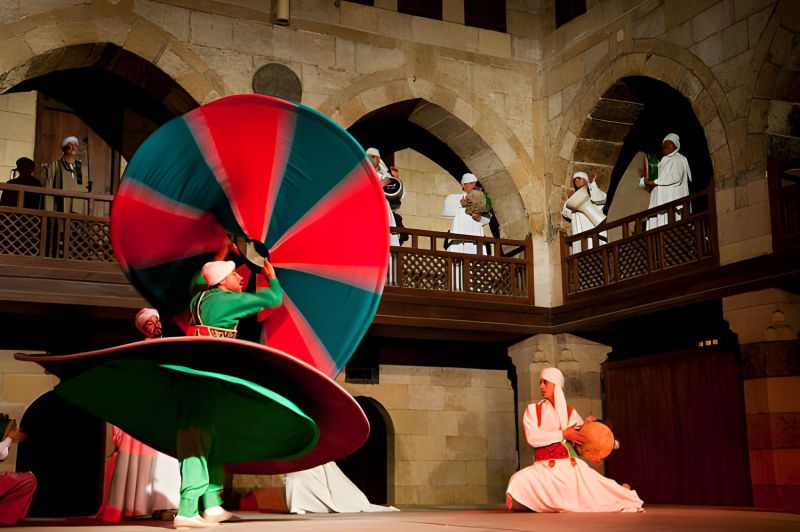
Few art forms capture the mysticism and soul of Egypt quite like the mesmerizing Sufi dance. Known locally as 'Tanoura', this whirling ritual is more than a performance—it's a spiritual journey rooted in centuries-old Islamic philosophy. The Egyptian Sufi dance traditions blend devotion, rhythm, and cultural heritage into an experience that transcends time, uniting body and spirit in a dance of divine love. With hypnotic movements and dazzling colors, the dance symbolizes the Sufi’s quest to connect with God through meditation in motion. As the dancer spins, his colorful skirt flares like a blooming flower, reflecting both the universe’s harmony and humanity’s eternal search for spiritual enlightenment.
To truly understand Egyptian spiritual heritage, one must explore its Sufi traditions. These sacred performances are not merely entertainment—they're acts of worship reflecting Egypt’s deep-rooted mystical culture. The Sufi dance links Egypt’s Islamic history with its vibrant artistic expression, often performed during religious festivals, spiritual gatherings, and cultural shows across Cairo and other historic cities. Tourists captivated by Cairo’s Islamic Cairo district or attending night performances in historic sites like Wadi El Natrun often encounter these breathtaking displays of spiritual artistry.
The Origins of Egyptian Sufi Dance
The roots of Egyptian Sufi dance traditions stretch back to the medieval Islamic era, inspired by the teachings of Jalal al-Din Rumi and the Mevlevi order. However, Egypt developed its own version—Tanoura—distinct from the Turkish sema. The word “Tanoura” comes from the Arabic for ‘skirt’, referring to the dancer’s layered, brightly colored garment that symbolizes cosmic unity and divine order. Introduced by Sufi mystics during the Ottoman rule, the dance evolved into a uniquely Egyptian expression of spiritual devotion and artistic flair.
In traditional gatherings known as 'zikr' or 'dhikr'—meaning “remembrance” of God—devotees used rhythmic chanting, music, and whirling to reach a trance-like state of divine connection. Over time, these practices transitioned from closed religious ceremonies into public performances that preserved their sacred symbolism while embracing Egypt’s artistic spirit. Today, they are performed in cultural centers, Sufi lodges, and tourist attractions, particularly near landmarks such as the Mosque of Sultan Hassan in Cairo.
The Symbolism Behind the Whirl
Every spin in the Sufi dance narrates a deeper metaphysical message. The dancer, known as a 'whirler', symbolizes the human soul’s journey from earth to the divine. The rotation represents the planets orbiting the sun, the eternal motion of life, and the cyclical nature of existence. As the dancer’s body spins, his spirit aims to detach from the material world, transcending earthly limitations.
The Tanoura costume amplifies this symbolism. Each color embodies elements of life—the green for nature, yellow for light, red for passion, and blue for the infinite sky. The dancer’s rising speed and flowing skirt mirror the cosmos’s motion, illustrating harmony between man and creation. This unique visual narrative transforms every performance into a living poem of faith and unity.
Music and Instruments in Sufi Dance Ceremonies
The music accompanying Egyptian Sufi dance traditions plays a crucial role in elevating the spiritual atmosphere. Traditional instruments such as the 'ney' (reed flute), 'tabla', and 'daf' (frame drum) create hypnotic rhythms that guide the dancer’s movements. The chanting of sacred verses, often invoking the 99 names of Allah, deepens the trance-like experience. As the tempo accelerates, the energy intensifies, leading both performer and audience into an almost meditative state of ecstasy.
In Cairo, one can witness these ceremonies in locations like the historic Al Hussein Mosque area or cultural venues that preserve ancient Egyptian traditions. Many travelers exploring Cairo Day Tours often include evening Tanoura performances at the El-Ghouri Complex, where the spiritual and artistic blend leaves spectators spellbound.
The Tanoura Dancer’s Attire and Ritual Preparation
Before each performance, the dancer engages in a quiet ritual of preparation. It’s not just about wearing the colorful skirts—it’s a meditative process. The layered skirts represent the soul’s ascent through stages of enlightenment. The dancer’s white undergarment symbolizes purity and spiritual rebirth, while the multicolored layers signify the physical world’s complexity. When the whirler removes the outer layer mid-performance, it marks the symbolic act of shedding earthly attachments to embrace divine union.
Each garment is meticulously crafted by artisans who understand the deep symbolism woven into every thread. Many performers inherit their roles through generations, keeping the ancient spiritual practices alive in a rapidly modernizing world.
Modern Interpretations and Global Influence
While rooted in religious mysticism, Egyptian Sufi dance has transcended its spiritual origins, becoming a symbol of national identity and cultural pride. Today, the Tanoura dance features prominently in festivals, tourism events, and cultural showcases across Egypt and beyond. It’s often performed for visitors during Egypt Nile Cruises or as part of Luxor Day Tours, offering travelers a glimpse into Egypt’s mystical heritage.
Its popularity has even reached global stages, inspiring contemporary artists, choreographers, and filmmakers. Yet, authentic practitioners remain committed to preserving the sacred essence of the ritual. For them, each spin still embodies the eternal search for truth and oneness with the divine. The dance’s enduring appeal lies in this fusion of devotion, artistry, and timeless symbolism.
Where to Experience Sufi Dance in Egypt
Cairo remains the heart of Sufi dance traditions. The Wekalet El-Ghouri Arts Center, near Khan El Khalili Bazaar, hosts weekly Tanoura performances that attract both locals and tourists. The venue’s 16th-century courtyard, illuminated by soft lanterns, creates a perfect setting for this spiritual spectacle. Luxor, Alexandria, and even Aswan occasionally host Tanoura shows during religious festivals and national holidays, blending Egypt’s ancient artistry with contemporary cultural tourism.
Travelers exploring Egypt through curated Egypt Travel Packages can easily incorporate Sufi performances into their itineraries to experience the nation’s living spiritual legacy.
Spiritual Philosophy Behind the Sufi Dance
At its core, the Egyptian Sufi dance represents the human spirit’s endless yearning for divine love. Sufis believe the heart, not the intellect, leads the way to truth. The spinning motion symbolizes the surrender of self and the dissolution of ego—the dancer becomes one with the divine rhythm of the universe. This philosophy aligns with the Sufi concept of “fana,” the annihilation of the self in God.
Each turn carries a spiritual message: to lose oneself in love, to remember the Creator, and to transcend the material world. The performance is thus a moving meditation, where devotion becomes dance, and faith transforms into artistic expression. Observing or participating in a Sufi dance evokes peace, clarity, and spiritual awakening, making it one of Egypt’s most profound cultural treasures.
FAQs About Egyptian Sufi Dance Traditions
What is the significance of the Egyptian Tanoura dance?
The Tanoura dance symbolizes the Sufi’s spiritual journey toward divine unity. Each spin represents the continuous motion of life, the soul’s ascent to enlightenment, and the harmony between humanity and the universe. It’s a sacred form of meditation expressed through rhythmic movement and color.
Where can tourists see authentic Sufi dance performances in Egypt?
Authentic performances are held at the Wekalet El-Ghouri Cultural Center in Cairo, the Al Hussein district, and during Sufi festivals across the country. Many Private Egypt Tours include evening shows highlighting Sufi traditions.
What is the difference between Tanoura and the Turkish Whirling Dervishes?
Although both derive from Sufi practices, the Egyptian Tanoura is more colorful and theatrical, emphasizing visual symbolism and rhythm. The Turkish version, called Sema, follows stricter religious rituals and features white costumes symbolizing purity and humility.
Is Sufi dance open to non-Muslims?
Yes, many performances are open to everyone. While rooted in Islamic spirituality, the dance conveys universal themes of love, peace, and harmony. Non-Muslim visitors are welcome to observe and appreciate its artistic and spiritual dimensions.
How has Sufi dance influenced modern Egyptian culture?
Sufi dance has become a vital part of Egypt’s cultural identity, blending tradition with performance art. It features in tourism festivals, national celebrations, and global exhibitions, reflecting Egypt’s unique ability to preserve spirituality through art. Visitors can enjoy these experiences while exploring Egypt Vacations that highlight the country’s rich cultural heritage.