

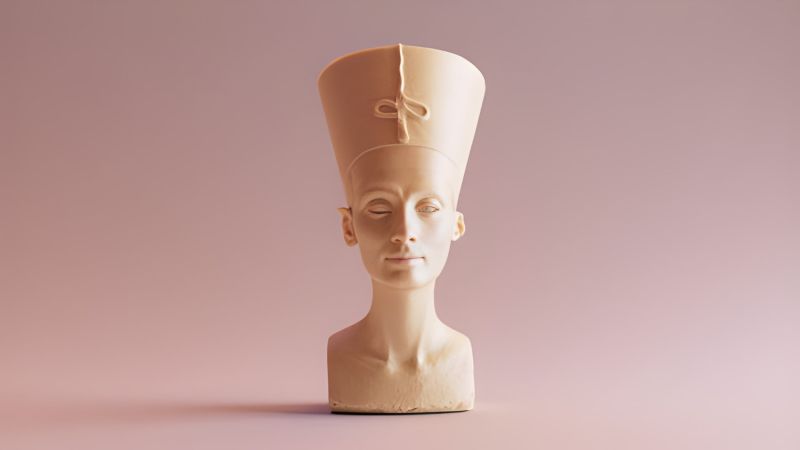
The Egyptian Queen Nefertiti: The Radiant Power Behind Ancient Egypt’s Golden Age
Queen Nefertiti remains one of the most captivating and enigmatic figures in world history. As the Great Royal Wife of Pharaoh Akhenaten, she stood at the epicenter of a radical transformation that reshaped Egypt’s religion, art, and culture more than 3,300 years ago. Her name, meaning ‘the beautiful one has come,’ truly reflected her grace, strength, and influence. Nefertiti wasn’t merely a consort; she was a co-ruler, a priestess, and a revolutionary who defied conventions. Her likeness, immortalized by the iconic limestone bust discovered in Amarna, continues to fascinate historians, travelers, and art lovers worldwide. With her timeless beauty and bold political role, Nefertiti symbolized divine femininity and royal authority unlike any other Egyptian queen before her.
Born during the 14th century BCE, Nefertiti’s life intertwined with an extraordinary chapter in Egyptian history. She and Akhenaten initiated a dramatic shift from traditional polytheism to the worship of one god, Aten — the sun disk. This religious revolution, known as the Amarna Period, marked a breathtaking experiment in spirituality and governance. But beyond the religious upheaval, Nefertiti’s story reveals much about Egypt’s artistic brilliance, women’s influence in politics, and the enduring allure of ancient civilization. Modern visitors exploring Amarna or admiring her bust at the Neues Museum in Berlin can’t help but feel the pulse of her legacy. Whether you’re planning a historical adventure or researching Famous Egyptian Queens, Queen Nefertiti’s name inevitably shines at the top of the list.
The Origins and Early Life of Queen Nefertiti
Nefertiti’s origins remain partially shrouded in mystery. Some scholars believe she was the daughter of Ay, who later became pharaoh after Tutankhamun, while others argue she might have been of foreign descent. Regardless of her lineage, Nefertiti grew into a woman of exceptional intelligence and charisma. Historical evidence suggests she married Akhenaten, then known as Amenhotep IV, before his ascension to the throne. Together, they would embark on one of the most radical reigns in ancient Egyptian history.
The couple’s partnership was extraordinary, both politically and spiritually. Nefertiti wasn’t a passive queen relegated to ceremonial duties. She appeared alongside Akhenaten in official inscriptions, performing religious rituals and even smiting enemies — a role typically reserved for kings. Her prominence reflected a new paradigm: the merging of divine femininity with pharaonic authority. This dynamic partnership, recorded in temples and stelae, shows that Nefertiti’s influence extended far beyond the palace walls of Thebes. To grasp the world she lived in, one must explore locations like Tell el-Amarna, the city built by Akhenaten in honor of Aten, where Nefertiti’s presence once illuminated a new capital.
Nefertiti’s Role in Religious Revolution: The Worship of Aten
At the heart of Nefertiti’s story lies the religious transformation of ancient Egypt. Together with Akhenaten, she championed the monotheistic worship of Aten, the sun’s radiant disk, symbolizing light, life, and truth. The queen often appeared in temple reliefs offering prayers and incense to Aten, her graceful silhouette bathed in divine rays. This shift was revolutionary — it dismantled the powerful priesthood of Amun and centralized faith around the royal family.
Nefertiti’s devotion to Aten wasn’t superficial. Art from the Amarna period portrays her as nearly equal to the pharaoh, sometimes wearing the blue crown typically associated with kings. She wasn’t merely a consort but a spiritual leader, an embodiment of living divinity. This newfound prominence elevated her status to near co-regent, signaling her vital role in maintaining Egypt’s spiritual harmony during one of its most turbulent eras. For anyone intrigued by Egyptian theology, exploring temples like Karnak Temple or reading about Amun Ra provides an essential contrast between the old gods and Aten’s revolutionary worship.
The Artistic Revolution of the Amarna Period
Under Nefertiti’s influence, Egyptian art experienced an unprecedented transformation. The rigid, idealized styles that had dominated for centuries gave way to a more naturalistic, human-centered aesthetic. Sculptures and reliefs depicted the royal family in intimate domestic scenes — playing with their daughters or worshipping Aten beneath its sun rays. This new art form mirrored the couple’s religious beliefs, emphasizing divine warmth and human emotion.
The stunning Egyptian Museum in Cairo and museums across the world preserve magnificent examples of this era’s artistry. The most iconic piece, of course, is the famed bust of Nefertiti — a masterpiece of balance and beauty that captures her elegance and regal dignity. This limestone sculpture, with its exquisite symmetry and serene gaze, set new artistic standards that influenced Egyptian aesthetics for generations.
The Power Behind the Throne: Nefertiti as Co-Regent
As Akhenaten’s reign matured, Nefertiti’s role deepened. Inscriptions and reliefs suggest she may have ruled beside him under the name Neferneferuaten. Some historians even believe she briefly reigned as pharaoh after his death, bridging the transition to Tutankhamun’s rule. Her political acumen, combined with her divine image, secured stability in a kingdom undergoing massive ideological upheaval.
This dual sovereignty was unprecedented. It challenged the traditional patriarchal structure of Egyptian monarchy and showcased the evolving role of women in royal politics. Her reign, whether official or symbolic, left an indelible mark on Egypt’s governance. When pondering the lineage of powerful women like Queen Hatshepsut or Queen Cleopatra, Nefertiti stands as their spiritual predecessor — a woman whose intellect and resolve shaped the destiny of an empire.
The Disappearance and Mystery of Nefertiti’s Final Years
One of history’s most tantalizing mysteries revolves around Nefertiti’s disappearance. Around the 12th year of Akhenaten’s reign, her name fades from inscriptions. Did she die suddenly? Was she elevated to co-regency under another name? Or did she rule in secrecy after Akhenaten’s passing? Archaeologists and Egyptologists continue to debate these possibilities.
Some believe her tomb may lie hidden within the walls of the King Tutankhamun Tomb in the Valley of the Kings. Advanced radar scans have hinted at possible secret chambers, though definitive proof remains elusive. Whether she rests alongside Akhenaten or in an undiscovered burial site, her absence only fuels the fascination surrounding her legend. Each new archaeological dig renews hope that one day, the lost queen’s final resting place will be revealed.
Nefertiti’s Enduring Legacy in Modern Culture
Few historical figures have transcended time as gracefully as Nefertiti. Her image graces art exhibitions, literature, and fashion; her influence ripples across centuries. To this day, Nefertiti symbolizes feminine power, beauty, and resilience. Egypt’s tourism industry celebrates her as an icon of national pride, drawing countless visitors eager to uncover traces of her world.
Travelers exploring the sites of ancient Egypt — from Amarna’s ruins to the grandeur of Thebes — walk in her footsteps. Cultural heritage tours often include visits to artifacts connected with her reign, offering a glimpse into a time when a queen’s word could move both gods and men. Her story continues to inspire debates, documentaries, and exhibitions worldwide, reinforcing her status as one of antiquity’s most compelling women.
FAQs about The Egyptian Queen Nefertiti
Who was Queen Nefertiti?
Queen Nefertiti was the Great Royal Wife of Pharaoh Akhenaten, ruling during the 18th Dynasty of ancient Egypt. She played a crucial role in promoting the worship of Aten, the sun disk, and is celebrated for her beauty, intelligence, and political influence. Her reign marked a golden age in Egyptian art and culture.
What is Queen Nefertiti famous for?
Nefertiti is best known for her role in Egypt’s religious revolution, her influential partnership with Akhenaten, and the world-famous limestone bust that bears her likeness. The bust remains one of the most iconic artifacts of ancient Egypt, symbolizing timeless beauty and feminine strength.
Where was Queen Nefertiti’s tomb found?
To date, Nefertiti’s tomb has not been conclusively located. Archaeologists suspect it may lie within or near the tomb of King Tutankhamun in the Valley of the Kings, but ongoing investigations have yet to provide definitive proof.
Did Nefertiti rule Egypt alone?
Evidence suggests Nefertiti may have ruled alongside Akhenaten and possibly as a pharaoh in her own right under the name Neferneferuaten. Some scholars propose she acted as co-regent or even ruled after Akhenaten’s death before Tutankhamun’s ascension.
Why is Nefertiti important today?
Nefertiti represents not only the splendor of ancient Egypt but also the enduring power and influence of women in leadership. Her image continues to inspire historians, artists, and travelers, serving as a bridge between the ancient and modern worlds. Her story remains essential for anyone exploring Egyptian history, culture, and the evolution of royal power.