

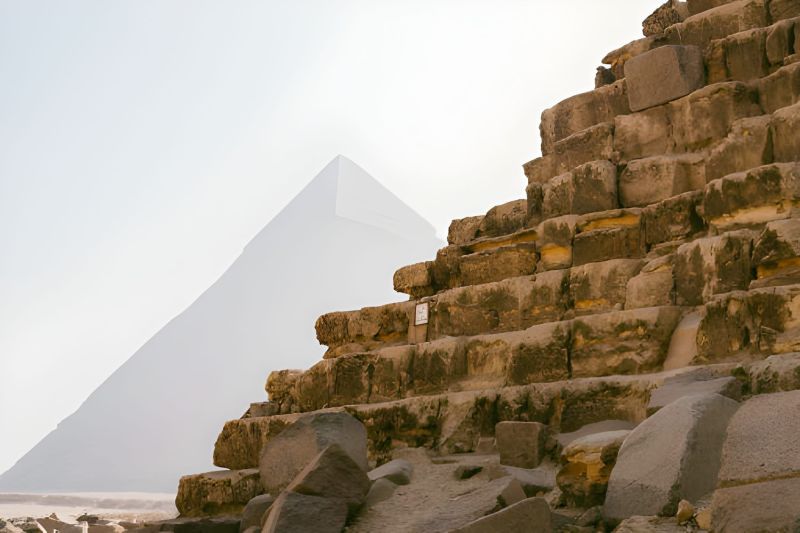
Why Did The Egyptians Build Pyramids: Secrets Behind Egypt’s Eternal Monuments
For thousands of years, the pyramids of Egypt have fascinated travelers, historians, and dreamers alike. Those towering structures rising from the sands of the desert are more than stone giants — they are symbols of eternity, divine power, and human ingenuity. But why did the Egyptians build pyramids? What was their purpose, beyond being awe-inspiring landmarks? To answer that, we must step back into the heart of Ancient Egypt, a civilization deeply tied to religion, the afterlife, and the belief that death was not an end but a passage to eternal life.
Each pyramid, especially those like the Great Pyramid of Khufu, was built as a monumental tomb for a pharaoh — the god-king who ruled Egypt and was believed to become divine after death. The Egyptians built pyramids not just to house their kings but to ensure that the pharaoh's soul ascended to the heavens and united with the sun god, Ra. These grand tombs were carefully aligned with the stars, reflecting profound astronomical knowledge, spiritual significance, and architectural brilliance. Their purpose extended far beyond the physical; they embodied the Egyptian worldview — a blend of cosmic order, spirituality, and innovation that still astonishes us today.
The Spiritual Purpose: Pyramids as Gateways to Eternity
The central reason the Egyptians built pyramids was rooted in their religious beliefs. They viewed death as a transition, not an end. The pyramid’s shape — with its broad base and pointed top — symbolized the rays of the sun, guiding the pharaoh’s soul toward heaven. For the Egyptians, life after death mattered just as much as life itself. That’s why every pyramid was designed as a spiritual ladder, allowing the king to join Ra, the God Ra, in the sky.
Inside, chambers were filled with treasures, offerings, and texts from the Book of the Dead to protect and guide the deceased ruler. The walls were adorned with Egyptian hieroglyphics describing rituals, prayers, and invocations to ensure safe passage through the afterlife. Every stone reflected their devotion to immortality — the belief that the pharaoh’s ka (spirit) needed a sacred home to thrive forever.
The Divine Connection Between Pharaohs and Gods
Egyptians believed their rulers were divine intermediaries between gods and mortals. Building colossal pyramids reinforced that sacred link. Each pharaoh claimed descent from the gods, and the pyramid became a tangible symbol of divine authority. The structure’s orientation — often aligned with specific stars or the cardinal directions — wasn’t random. It mirrored the heavens, linking the earthly kingdom to celestial order, known as Ma’at. Through pyramid construction, pharaohs declared their eternal reign, bridging heaven and earth.
The Architectural Brilliance Behind the Egyptian Pyramids
Beyond their religious significance, the pyramids showcased architectural genius. The question of how the pyramids were built continues to intrigue experts. The Egyptians developed innovative techniques: using massive limestone and granite blocks, intricate ramps, and precise alignment with astronomical points. Their mastery of geometry and engineering was unmatched, especially given the tools of the era. Each project mobilized thousands of skilled workers, not slaves as once believed, but well-fed laborers contributing to a monumental act of devotion.
The Evolution from Mastabas to True Pyramids
The pyramids didn’t appear overnight. Early royal tombs, known as mastabas, were flat-roofed structures made of mudbrick. The revolutionary step came under Pharaoh Djoser, whose architect Imhotep designed the Step Pyramid of Saqqara. This layered design marked the birth of pyramid construction, evolving later into smooth-sided marvels like those at Giza. Each phase reflected technological progress and deepening religious symbolism.
The Great Pyramid: Symbol of Power and Legacy
The Great Pyramid of Khufu remains the most iconic. Rising originally to about 146 meters, it was the tallest human-made structure for nearly 4,000 years. Its precision — with sides aligned almost perfectly with true north — demonstrates the Egyptians’ advanced understanding of mathematics and astronomy. Scholars believe it represented the pharaoh’s eternal link to the cosmos, a stairway for his soul to ascend. Nearby, monuments like the Sphinx Egypt served as guardians, protecting the royal necropolis from evil forces.
Political and Social Motives Behind Pyramid Construction
While spirituality was the main driver, politics also played a vital role. Building a pyramid demonstrated the pharaoh’s divine authority and control over resources. It unified the nation, providing employment and fostering loyalty. During the Old Kingdom, pyramid-building became a national enterprise — a mark of wealth, stability, and centralized power. Every stone laid reinforced the pharaoh’s supreme status, both in life and in death.
The Workforce Behind the Monuments
Contrary to popular myths, the pyramids weren’t built by slaves. Archaeological discoveries suggest they were constructed by skilled laborers organized into teams, supported by farmers during the Nile’s inundation season. Villages near the pyramids provided food, medical care, and housing, proving this was a project of national pride. These workers believed they were serving divine purpose, ensuring their king’s immortality and, by extension, the prosperity of all Egypt.
Astronomical Alignment and Cosmic Symbolism
The Egyptians built pyramids with astonishing precision. Many align perfectly with celestial bodies, particularly the North Star and Orion’s Belt — constellations associated with Osiris, the god of resurrection. The layout of the Giza Pyramids mirrors the stars of Orion, symbolizing the pharaoh’s journey to join the gods. The pyramid’s slanted sides embodied the sun’s rays, while entrances often faced the rising sun, connecting life, death, and rebirth in an endless cycle.
The Nile’s Sacred Influence on Pyramid Locations
The positioning of pyramids along the west bank of the Nile River wasn’t coincidental. The west was associated with the setting sun and thus, death and the afterlife. This geographic symbolism placed the pyramids within the realm of the dead, across from the living world of the east. From these locations, pharaohs could eternally watch over their people and the life-giving waters of the Nile.
The Cultural Continuity of Pyramid Building in Egypt
Even as pyramid construction waned, the symbolism endured. Later pharaohs, such as those buried in the Valley of the Kings, continued to build grand tombs carved into cliffs, preserving the same spiritual principles. The pyramid’s essence — eternal life, divine power, and cosmic harmony — lived on in Egypt’s architecture, art, and religion for millennia. Each monument, from temples like Karnak Temple to the tombs of nobles, echoed the same yearning for immortality.
The Enduring Symbol of Egyptian Civilization
To this day, the pyramids remain Egypt’s most enduring symbols, attracting visitors from around the globe seeking to understand their mystery. Whether viewed as tombs, temples, or cosmic engines, they encapsulate the Egyptians’ profound connection between life, death, and the divine. Their legacy continues to inspire wonder, serving as a reminder that humanity’s quest for eternity began long before modern times.
Frequently Asked Questions About Why the Egyptians Built Pyramids
1. Were all pyramids tombs for pharaohs?
Primarily, yes. Most pyramids served as royal tombs for kings and occasionally queens or high-ranking officials. However, some smaller pyramids also housed members of the royal family or acted as symbolic structures honoring the rulers' divine status.
2. Why did the Egyptians choose the pyramid shape?
The pyramid shape symbolized the sun’s rays. Ancient Egyptians believed it represented a stairway for the pharaoh’s soul to rise to the heavens and merge with the sun god Ra. Its geometric perfection also expressed cosmic balance and harmony.
3. How long did it take to build the Great Pyramid?
Historical and archaeological evidence suggests the Great Pyramid took around 20 years to construct. Thousands of skilled workers, engineers, and artisans were involved, working in organized teams to achieve unparalleled precision.
4. What materials were used in pyramid construction?
The Egyptians primarily used limestone for the outer casing, granite for inner chambers, and local sandstone for the core structure. These materials were transported from quarries along the Nile using ingenious sledging and lubrication techniques.
5. Why did pyramid building eventually stop?
Pyramid construction declined due to economic strain, resource depletion, and evolving burial practices. Later dynasties favored hidden tombs like those in the Valley of the Kings to protect royal treasures from looting and emphasize spiritual over monumental expression.
Conclusion: The Eternal Legacy of the Egyptian Pyramids
The answer to why the Egyptians built pyramids transcends simple explanations. It lies at the crossroads of faith, power, and innovation. These structures were not merely tombs; they were expressions of cosmic order, political unity, and divine aspiration. Each pyramid told a story of a civilization obsessed with eternity and the belief that death was merely a doorway to a higher realm. From the sands of Giza to the valleys of Thebes, Egypt’s pyramids continue to whisper the same timeless truth — that humanity’s desire to reach the heavens is as old as history itself.