

The National Museum of Egyptian Civilization
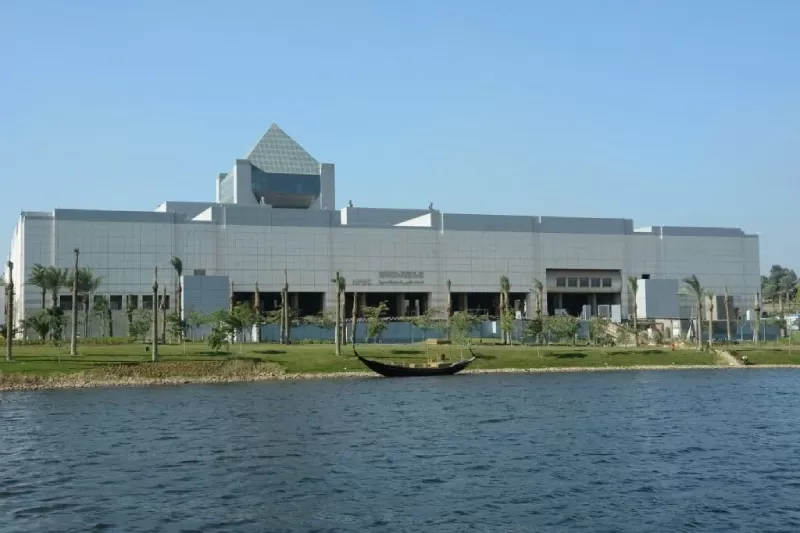
The National Museum of Egyptian Civilization: One Place to Tell Egypt’s Story
In a country where history is often found in bits and pieces of temples, tombs, scattered museums, and archaeological sites, The National Museum of Egyptian Civilization (NMEC) assembles all those pieces into one place. Situated on the shores of Ain El-Sira Lake in Cairo’s historic Fustat district, NMEC is not just about ancient statues and golden masks, its a grand narrative. A story of the people of Egypt, which is charted from prehistoric times to modernity.
What makes NMEC distinct is its breadth: the majority of museums in Egypt display a specific era or collection, NMEC's goal is telling the story of Egypt, from the stone tools left behind by the first settlers, the silk robes of Islamic sultans, and the pin striped suits of 20th century leaders. In this sense, the museum aims to share an identity as much, as much as it intends to display artefacts and archaeology.
A New Type of Museum for an Old Country
The museum opened in 2017, but was made internationally famous in 2021 during the Golden Parade of the Pharaohs - a beautiful state organized parade that moved 22 royal mummies from the Egyptian Museum in Tahrir to their future, permanent home at NMEC. The parade was rich with spectacular music, lights and military ceremony, and was shared with the world. It exemplified Egypt's pursuit to celebrate their heritage, as well as their attempts to secure, preserve, protect and promote their heritage.
The museum has recently become one of the most popular sites for locals and visitors alike.
The Mummies Hall - A Journey into Egypt’s Rulers & Ruleresses
One of the more poignant experiences at NMEC is walking into the Mummies Hall of the Royal Mummy exhibit - with some of the most famous rulers of Ancient Egypt - Ramses II, Seti I, Hatshepsut and Amenhotep I, to name a few - in one quiet, dimly lit space, underneath the main galleries.
They are not presented with pomp and circumstance, but with a respectful stage; no hot spot lighting or frilly presentations - just the preserved bodies of people who once ruled over one of the largest civilizations in the world. It is indeed a haunting, moving and one-in-a-lifetime experience.
There are always fascinating nuggets of information in the exhibit related to the science of mummification and the lives of these characters - what were the battles they fought, temples they built, diseases lived with and injuries from the revelation of modern CT scans to name a few.
Beyond the Pharaohs: An Exploration of Egyptian Civilization
Upstairs in the primary exhibition arena is a sweeping exploration of Egyptian history. Although the museum presents material chronologically, it also is structured around themes--society, beliefs, state, writing, and culture--allowing people to think about how Egyptians lived, governed, built, worshipped, dressed, and thought, over millennia.
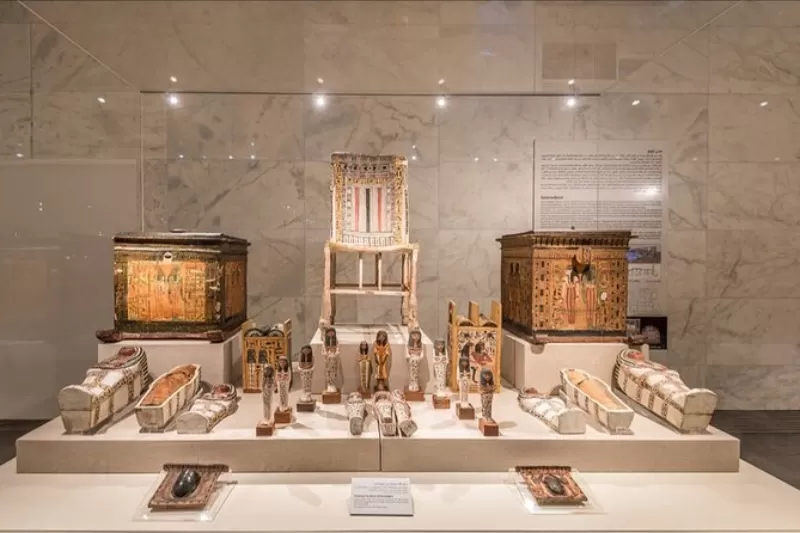
Artifacts range from ancient pottery and tools to manuscripts of early Christianity, Islamic calligraphy, Coptic icons, royal jewels and robes, and material from Egypt's postcolonial period. It is not a museum confined to the past. Instead, it is a changing story about people and country always in the dialetic of overlapping the world.
Interactive displays, touchscreens, and reconstructions of the period put everything in perspective. Whether you are gained Egyptologist or rainfall curious traveler, you will find something that surprises you.
Architecture and Environment
The architecture of the museum is contemporary, clean, and elegant. The interiors are spacious, utilize clean lines, and incorporate natural light. The building was designed not as a monument, but to shed the focus from itself, to allow the collection to speak for itself and withstand comparison to its environment. The surroundings: expansive views of the lake and nearby mosque are tranquil and allowed for the possibility of deep reflection—worthy of consideration against the intensity of Cairo's frenetic streets.
In addition, it represents part of a grander vision to transform the older parts of Cairo into a cultural and tourism district, as a launch point to engage the recently opened Coptic Museum or the Hanging Church, and the ruins of Fustat.
What Makes the National Museum of Egyptian Civilization Worth The Visit?
As it's one of the very few places in the world where one can walk from prehistoric tools, to royal mummies to modern revolution all in the same building. It is educational without being overwhelming, it is respectful without being dusty, and it is immersive without being flashy.
Most importantly it gives a view of Egypt that is holistic, not just about the monuments, but about the people, and their art, their beliefs, their struggles, their everyday lives. You leave with a better sense of the richness and resilience of Egyptian culture, in every one of its historical chapters.
Visiting Information
- Location: El Fustat, Old Cairo, near Ain El-Sira Lake
- Hours: Daily 9 AM - 5 PM, open until later on Friday and Saturday
- Entry: On site and online; Royal Mummies Hall requires a separate ticket
- Amenities: Cafés, gift shop, lecture halls, full accessible design
- How to Get There: Car or taxi, Metro subway stop at El Malek El Saleh, then ride was only 5 minutes long to the museum.
Tips for Visitors:
- Plan for at least 2–3 hours for a full visit
- Visit the Royal Mummies Hall first, then go to each themed gallery
- Audio guides and multilingual signage available
- Pair your visit with the other places of Old Cairo nearby to fill a day of discovery
- Most places allow photography, but no flash photography in the Mummies Hall
Conclusion
The National Museum of Egyptian Civilization is not just a site to see some artifacts. It is where the story of Egypt comes together; complete, not in pieces. It shows us the full range of the reality of Egypt, from kings and queens, poets and farmers, and gods embraced in stone to faces wrapped in linen, and it brings this great civilization to a human scale.
It is not only about what Egypt was, but it is also about who Egyptians have been, and continue to be. For those wanting to get to the heart of this ancient and vibrant country, it is one of the most significant venues to visit.

How Were the Pyramids Built
How were the pyramids built? Explore the methods, tools, and labor behind Egypt’s greatest architectural feat, separating fact from myth and mystery.

Great Pyramid of Khufu
Explore the Great Pyramid of Khufu, Egypt’s most iconic structure. Discover its history, construction secrets, and enduring legacy across 4,500 years.

Ancient Egypt
Discover the wonders of Ancient Egypt, its pharaohs, pyramids, temples, and beliefs. Explore one of the most influential civilizations in world history.

Cairo historical sites
Explore Cairo's top historical sites, from ancient mosques and pyramids to Coptic churches and bustling bazaars. Discover the city’s layered, living history.

The pyramids
Explore Egypt’s pyramids, from Giza to Saqqara. Learn how they were built, why they mattered, and what they reveal about ancient Egyptian civilization.

Mosque of Sultan Hassan
Explore the grandeur of the Mosque of Sultan Hassan in Cairo, an architectural marvel that blends Mamluk elegance, rich history, and spiritual depth in the heart of Egypt.

Al Rifai Mosque
Explore the Mosque of Al-Rifa’i in Cairo, a majestic royal mausoleum blending Ottoman elegance and Egyptian tradition, located beside the historic Sultan Hassan Mosque.

Ibn Tulun Mosque
Discover the Mosque of Ibn Tulun, Cairo’s oldest surviving mosque in its original form, featuring vast open spaces, unique spiral minaret, and centuries of uninterrupted history.

Bayt Al-Suhaymi
Step into Ottoman-era Cairo at Bayt Al-Suhaymi, a beautifully preserved historic house filled with mashrabiyas, marble floors, and echoes of a refined domestic life.

Mosque of Muhammad Ali: Cairo´s Crown above the citadel
Explore the Mosque of Muhammad Ali in Cairo’s Citadel, a stunning Ottoman-style landmark symbolizing modern Egypt’s birth and offering panoramic views over the city.

Madrassa of Al-Nasir Muhammad
Discover the Madrassa of Al-Nasir Muhammad, a medieval gem in Cairo’s Citadel blending Mamluk artistry, religious education, and royal ambition in one enduring structure.

Gayer-Anderson Museum
Explore the Gayer-Anderson Museum, a beautifully preserved Ottoman-era home filled with Islamic art, antique furnishings, and the personal touch of a British collector.

El Moez Street
Walk through centuries of Islamic history on El Moez Street, Cairo’s most famous historic avenue lined with mosques, palaces, and vibrant local life.

Abdeen Palace
Step into Egypt’s royal past at Abdeen Palace, a 19th-century landmark in downtown Cairo filled with regal architecture, lavish halls, and rare historic museums.

Manial Palace Museum
Explore the Manial Palace Museum, a hidden royal gem in Cairo where Islamic, Persian, and European styles blend into one of Egypt’s most elegant and unique historic residences.

Al-Hakim Mosque
Discover the Al-Hakim Mosque in Cairo, a Fatimid-era masterpiece with a rich history, unique architecture, and a powerful connection to Egypt’s early Islamic heritage.

Qalawun Complex
Step into the Qalawun Complex in Cairo, a stunning Mamluk masterpiece that combines a mosque, madrasa, and mausoleum into one of Islamic Cairo’s most breathtaking landmarks.

Al Azhar Mosque
Explore Al-Azhar Mosque in Cairo, one of the world’s oldest Islamic universities and a living symbol of religious scholarship, architectural beauty, and cultural continuity.

Al Hussein Mosque
Visit Al-Hussein Mosque in Cairo, a revered Islamic site believed to house the head of Imam Hussein and a central landmark of spiritual life and heritage in Egypt.

City of the dead
Discover Cairo’s City of the Dead, a vast historic necropolis where life and death coexist, blending Mamluk mausoleums, daily living, and centuries of Islamic heritage.

Baron Empain Palace
Step into the mysterious Baron Empain Palace in Heliopolis, Cairo, a unique Hindu-inspired mansion filled with legends, architectural grandeur, and restored historical charm.

Amr ibn al-As Mosque
Visit the Amr ibn al-As Mosque in Cairo, Egypt’s first mosque and a symbol of Islamic history, built during the earliest days of Muslim rule in North Africa.

Hanging church
Visit the Hanging Church in Cairo, one of Egypt's oldest and most iconic Coptic churches, built above a Roman fortress and rich with history, faith, and artistry.

Abu Serga Church
Explore Abu Serga Church in Coptic Cairo, one of Egypt’s oldest Christian landmarks and believed to shelter the Holy Family during their flight into Egypt.

church of saint george
Discover the Church of Saint George in Coptic Cairo, one of the most iconic Christian landmarks, known for its stunning architecture and rich history.

Synagogue Ben Ezra
Visit the Ben Ezra Synagogue in Cairo, a historic Jewish site in Coptic Cairo, famous for its deep history, stunning architecture, and connection to Egypt's Jewish heritage.

Valley of the queens
Explore the Valley of the Queens, the burial site of ancient Egyptian queens and royal children, featuring stunning tombs and murals in the Theban Necropolis.

Valley of the nobles
Discover the Valley of the Nobles in Luxor, where ancient Egyptian officials, priests, and artisans were buried in richly decorated tombs reflecting daily life, spirituality, and status.

Deir el medina
Explore Deir el-Medina, the ancient village of Egypt’s royal tomb builders. Discover their homes, tombs, and unique insight into daily life during the New Kingdom.

Medinet Habu
Explore the Temple of Medinet Habu in Luxor, a massive and beautifully preserved mortuary temple of Ramesses III, filled with vivid carvings and epic battle scenes.

Tomb of Queen Nefertari
Step inside the Tomb of Queen Nefertari, one of the most beautifully preserved and vividly painted burial sites in Egypt, built for the beloved wife of Ramesses II

King Tutankhamun Tomb
Step inside the Tomb of King Tutankhamun in the Valley of the Kings, where Egypt’s most famous discovery revealed a treasure-filled legacy and the story of a young pharaoh.

Queen Tiye
Discover the life of Queen Tiye, one of ancient Egypt’s most influential royal women, known for her intelligence, political power, and enduring legacy in the 18th Dynasty.

Temple of Kalabsha
Explore the Temple of Kalabsha, a remarkable Nubian monument relocated from rising Nile waters. Discover its Roman-era origins, architectural beauty, and religious legacy.

King Akhenaten
Discover the story of King Akhenaten, Egypt’s revolutionary pharaoh who reshaped religion, art, and power in one of the most dramatic chapters of ancient history.

Sacred lake at karnak Temple
Discover the Sacred Lake at Karnak Temple, an ancient pool used in religious rituals by priests of Amun. Still and reflective, it holds centuries of history and mystery.

Queen Nefertit
Step into the life of Queen Nefertiti, Egypt’s mysterious and powerful queen, whose beauty and influence helped shape one of the most extraordinary chapters in ancient history.

Amun Ra
Discover the story of Amun-Ra, the powerful fusion of two great Egyptian deities who became the supreme god of the ancient world’s most enduring civilization.

Monastery of Saint Catherine
Tucked beneath Mount Sinai, Saint Catherine’s Monastery is one of the world’s oldest Christian sites, rich in history, faith, and stunning desert scenery.

Tell el-Amarna
Explore Tell el-Amarna, the once-radical capital city of Akhenaten, where ancient Egypt’s boldest religious and artistic revolution briefly came to life.

El Kab
Explore El Kab, an ancient Egyptian city hidden in the cliffs of Upper Egypt. Discover its tombs, temples, and forgotten stories carved in stone.

King Menkaure
Discover the legacy of King Menkaure, builder of the third Giza pyramid, known for his refined art, religious devotion, and more human portrayal as a pharaoh.

Queen Hatshepsut
Uncover Queen Hatshepsut, the powerful female pharaoh of Egypt, who not only transformed the role of king, ruled as pharaoh in an era of peace and prosperity, but also had one of the most remarkable temples created in ancient Egypt at Deir el-Bahari.

Alexander the great
If you want to learn more about Alexander the Great, the astute conqueror who created a vast empire, transformed the world through war, vision, and the mixing of cultures.

Muhammad Ali Pasha
Discover the contribution of Muhammad Ali Pasha who brought reform and modernity to Egypt, organized a powerful military, and founded the modern state of Egypt.

King Ramses II
Experience Ramses II, the most famous pharaoh of Egypt, known for his epic battles, monumental temples such as Abu Simbel, and a reign that helped define the greatness of ancient Egypt.
_(52087101418).webp)
King Thutmose III
Learn about King Thutmose III, the warrior king who created Egypt's empire, led 17 campaigns, and epitomized a golden age of military, political, and cultural power.

Pyramid Of Teti
The Pyramid of Teti, found at Saqqara is the home of the ancient Pyramid Texts—Egypt’s earliest religious texts—and a connection to Old Kingdom funerary ideas.

Tombs of the Nobles
Discover the Tombs of the Nobles in Saqqara—beautifully-chiseled mastabas, showing daily life, beliefs, and social roles of elite in Egypt’s Old Kingdom.

Valley Temple of Khafre
Witness the Valley Temple of Khafre at Giza—an ancient site of ritual activity where kings of Egypt were prepared for burial—and the blend of architecture and spirit.

Fortress of Babylon
Discover the Fortress of Babylon in Coptic Cairo - an Ancient Roman stronghold, that has become the spiritual heart of Egypt's Coptic Christian heritage and art and, learned people of resilience.

Coptic Museum
Explore the Coptic Museum located in Cairo and boasts the richest collections of Coptic Christian art, manuscripts, and heritage in the world of Coptic Christianity nestled in the historic Fortress of Babylon.

Cairo tower
Man, if you really wanna feel like you own Cairo for a minute, just head up the Cairo Tower in Zamalek. It’s this crazy concrete spike poking the sky—total flex, honestly.

Tomb of Kagemni
Visit the Tomb of Kagemni in Saqqara-- an Old Kingdom masterpiece depicting vivid scenes of daily life, elaborate carvings, and a glimpse into elite life in ancient Egypt.

Abusir pyramids
Explore the Abusir Pyramids, Egypt's Fifth Dynasty ancient tombs, discover the site architecture changes, the development of sun worship, and royal burial traditions.

The Alabaster Sphinx
Visit the Alabaster Sphinx of Memphis—an exquisitely crafted monument of the New Kingdom, carved from precious stone, providing an understanding of artistry, kingship, and religious life in ancient Egypt.

Museum of Islamic Art
Visit Cairo’s Museum of Islamic Art with a superb collection of Islamic objects from several centuries of Muslims’ creativity, science, design, and cultural brilliance.

the Nilometer
Experience the Nilometer on Roda Island—as brilliant ancient instrument used to measure the Nile’s flood—and linked to science, survival, and spirituality in Egypt.

The Pyramid of Unas.
Visit the Pyramid of Unas in Saqqara, which has the earliest of the Pyramid Texts in which the text are a turning point for the religion of ancient Egypt, located within an unassuming stone casing.

Ti Tomb
Wander into the Tomb of Ti in Saqqara, where the vivid carvings of everyday life from Egypt's Old Kingdom add a fantastic human layer to ancient history and art.

Aqsunqur Mosque
Dive into Cairo’s Aqsunqur Mosque—a chill 14th-century spot famous for its bold blue Ottoman tiles and epic mashup of history, art, and Islamic vibes.

Skydive over the pyramids
Try skydiving over Egypt's Great Pyramids for an unforgettable mix of ancient history, adrenaline, and unbelievable views from the sky.

Palace of Mohamed Ali in Shubra
From elegance of a royal residence in the city, to a hidden gem that has charm and grace- Step into elegance at the royal retreat of Mohamed Ali, Shubra Palace.

Manasterly Palace
Get lost in Cairo’s Manasterly Palace—19th-century glam mixing Ottoman, Euro vibes, Nile views, and gardens that’ll make your camera jealous.

Madrasa And Mosque Of Amir Sarghatmish
Tucked away near Ibn Tulun, Amir Sarghatmish Mosque is a Mamluk-era stunner—quiet, elegant, and honestly one of Cairo’s most peaceful spots.

Sabil Umm Abbas
Sabil Umm Abbas in Cairo—tiny, stunning, full of Ottoman flair, charity, and tradition. Snap photos and soak up the history on Saliba Street.

Sabil of Khusro Basha
Get lost in Cairo’s Sabil of Khusro Basha—a 16th-century Ottoman gem where art, charity, and city history collide. Hidden beauty in plain sight.

Egyptian Gods
Meet ancient Egypt’s legendary gods—Ra, Osiris, Isis, Anubis, the whole gang—and unravel the jaw-dropping myths that shaped their world for thousands of years.

King Menes
Get the lowdown on King Menes—the OG pharaoh who supposedly pulled Egypt together and kicked off the First Dynasty. Dive into the legends, the lost tomb, and his epic Memphis legacy.

Egyptian hieroglyphics
Investigate Egyptian hieroglyphics as the divine script of ancient Egypt to understand how this potent visual language influenced historical developments alongside religious and cultural evolution.

Queen Cleopatra
Learn the life of Queen Cleopatra, last pharaoh of Egypt—politician, diplomat, and legend—who changed history at the crossroads of ancient Egypt and Rome.
.webp)
Tomb of Ramses IV
In the Valley of the Kings, investigate the Tomb of Ramses IV—an easy, exquisitely adorned royal tomb with bright artwork and ancient burial writings.

Tomb of Ramses VI
Discover the Tomb of Ramses VI in the Valley of the Kings, an artistic and symbolic masterwork replete with breathtaking wall paintings and historical Egyptian religious texts.

Tomb of Seti I
Investigate the Tomb of Seti I, the most beautiful and elaborate tomb in the Valley of the Kings, brimming with vibrant artwork, holy texts, and ancient architectural genius.

Tomb Of Ramses III
Explore the tomb of Ramses III in the Valley of the Kings, a magnificent royal burial rich in color, history, and religious symbolism, one of Egypt's most vibrant and expansive.

Wadi El Natrun
Visit the ancient valley of Coptic monasteries, Wadi El Natrun in Egypt, where early Christian monasticism continues to flourish in the quiet hug of the deser

Amada Temple
Find Amada Temple, the oldest in Nubia, with magnificent wall paintings and rare inscriptions—an old treasure moved to safety from the rising waters of Lake Nasser.

Wadi El Seboua
Explore Wadi El Seboua, the Temple of the Lions created by Ramesses II in Nubia. On the shores of Lake Nasser, a silent, secluded treasure overflowing with history, art, and desert splendor.

Gebel El Silsila
Discover Gebel El Silsila, the historical quarry used to construct the magnificent temples of Egypt. Find hidden tombs, shrines, and holy cliffs along the Nile's gentle curve.

Horus
Explore the myth and majesty of Horus, the falcon-headed god of ancient Egypt, symbol of kingship, sky, and divine protection.

the Nile River
Feel the eternal journey of the Nile, the heart of Egypt and the cradle for one of the world’s greatest civilizations that has influenced the landscape, cultures and histories for thousands of years.

God Ra
Explore the mythology and majesty of Ra, the ancient Egyptian sun god, the creator of life and lord of the universe, and discover how the golden light formed a civilizations faith and worldview.

Old Kingdom
Experience the beginnings of Egyptian civilization with the Old Kingdom—an era of god-kings, pyramid building prowess, and one of the world's greatest ancient cultures.

Rosetta Stone
The mystery of ancient Egyptian writing was unveiled to historians with the Rosetta Stone, which was an archaeological accident that became the key to understanding hieroglyphs, and eventually gave a voice back to an entire civilization.

Book of the Dead
Enter the spiritual pulse of ancient Egypt with the Book of the Dead, and wonderful collection of spells, prayers, and rituals to help ensure the safe passage of the soul into the afterlife.

king khufu
Explore the legacy of the pharaoh Khufu, the ancient Egyptian ruler who constructed the Great Pyramid of Giza—one of the most recognizable monuments in the world and an enduring symbol of royal ambition and engineering skill.

Nubia
Discover the amazing legacy of Nubia—an ancient African civilization that stood south of Egypt! This civilization gave rise to powerful kingdoms, featured a distinct culture, and has a long history of interaction with the Nile and the Pharaohs of Egypt.

Egypt
Travel to Egypt and immerse yourself in the echoes of industry and indolence, pharaohs and pyramids, and the Nile's persistent customs. Egypt's storied past, living cultures, and awe-inspiring landscapes form a rich tapestry that is endlessly intriguing to explore.

Bibliotheca Alexandrina
Explore the Bibliotheca Alexandrina, the new Library of Alexandria that is a fitting homage to the most important library from antiquity. Learn about its history, its history of rebirth, its design, and its place in global knowledge and culture.

Alexandria National Museum
Discover the story of Alexandria through the Alexandria National Museum, featuring more than 1,800 artifacts spanning ancient Egypt, the Greco-Roman period, and more. Explore Egypt's coastal gem through its preserved pieces.

Montaza Palace Gardens
Experience royal peace at Montaza Palace Gardens in Alexandria, Egypt, as you wander the combination of historic significance, landscape design, and coastal splendour where Egyptian kings previously walked.

Roman Amphitheatre
Visit the Roman Amphitheatre of Alexandria—the only known theatre from the Roman period in Egypt. Learn about its architecture, history, and its relationship of the modern, contemporary Alexandria to the classical past.

Ahmed Ibn Tulun
Ahmed Ibn Tulun the founder of Egypt's first Islamic dynasty was a visionary leader, builder, and scholar whose lingering legacy is still being felt in the heart of historic Cairo.

Giza Pyramids
Explore the majestic Pyramids of Egypt, ancient wonders on the Giza plateau. Discover the Great Pyramid, Sphinx, and millennia of history. Plan your unforgettable journey!

Colossi of Memnon
Discover the Colossi of Memnon in Luxor, 18-meter statues of Pharaoh Amenhotep III, legendary for their size, history, and the mysterious 'singing' sound at dawn

Grand Egyptian Museum
Explore the Grand Egyptian Museum near the Giza Pyramids, home to King Tut’s full collection and over 100,000 artifacts from ancient Egypt's rich history.

Luxor Temple
Explore the majestic Luxor Temple in Egypt, a stunning testament to ancient pharaohs. Witness grand columns, intricate carvings, and rich history along the Nile.
.webp)
Citadel of Saladin
Explore the Citadel of Saladin in Cairo, an iconic fortress with mosques, museums, and panoramic views built to protect Egypt during the Crusader era

Sphinx Egypt
Discover the mystery of the Great Sphinx of Giza, Egypt’s ancient guardian with a lion’s body, a pharaoh’s face, and secrets carved in stone for 4,500 years

Egyptian Museum
Explore Cairo’s Egyptian Museum, home to Tutankhamun’s treasures, royal mummies, and ancient artifacts that span over 5,000 years of Egypt’s remarkable history.

Saint Catherine Mountain
Climb Egypt’s highest peak, Saint Catherine Mountain in Sinai, for stunning views, spiritual history, and peaceful hiking through one of Egypt’s most sacred landscapes.

Maydoum Pyramid
The Pyramid of Meidum, near Cairo, is an early, unique Egyptian pyramid. Starting as a step pyramid, it was modified into the first attempt at a true pyramid, though it partially collapsed. A key step in ancient pyramid evolution (c. 2600 BC).

Memphis: The First Capital of Ancient Egypt
Explore Memphis, Egypt’s first capital, home to the Colossus of Ramses II, the Alabaster Sphinx, and the legacy of pharaohs in a rich open-air museum

Saqqara Pyramid
Visit the Step Pyramid of Saqqara, Egypt’s first pyramid and oldest stone monument, an iconic masterpiece built for Pharaoh Djoser by architect Imhotep

Dahshur
Visit Dahshur, home to the Bent and Red Pyramids, early engineering marvels by Pharaoh Sneferu in a peaceful desert setting just south of Cairo.

Valley of the Kings
Explore Egypt’s Valley of the Kings, home to the tombs of pharaohs like Tutankhamun, Seti I, and Ramses II, with vivid art and ancient secrets carved in stone

High dam of Aswan
Discover the High Dam of Aswan, Egypt’s modern marvel controlling the Nile. Learn how it powers the nation and gave rise to Lake Nasser, agriculture, and energy!

Abu Simbel
Visit Abu Simbel, Egypt’s majestic rock-cut temple of Ramses II. Discover its solar alignment, stunning statues, and the story of its dramatic rescue from Lake Nasser.

karnak temple
Explore Karnak Temple Complex in Luxor, Egypt’s largest ancient religious site. Walk through colossal columns, sacred temples, and the historic Avenue of Sphinxes.

Temple of Kom Ombo
Explore the Temple of Kom Ombo, Egypt’s unique double temple dedicated to Sobek and Horus, complete with crocodile mummies and ancient medical carvings.
.webp)
Deir el Bahari
Explore the stunning Temple of Hatshepsut in Luxor, a terraced masterpiece honoring Egypt’s first female pharaoh, carved into cliffs at Deir el-Bahari

philae temple
Explore Philae Temple, the sacred island sanctuary of Isis near Aswan. Discover its history, island setting, temple art, and dramatic relocation to Agilkia Island.

Temple of Edfu
Discover the Temple of Edfu, Egypt’s best-preserved temple dedicated to Horus. Explore ancient myths, majestic carvings, and Ptolemaic grandeur on the Nile.

Nubian Village
Discover the Nubian Village near Aswan, where colorful homes, ancient traditions, and warm hospitality offer a rich cultural experience along the Nile River.

khan el khalili
Discover Khan el-Khalili, Cairo’s historic bazaar. Shop for spices, jewelry, and crafts, sip mint tea, and explore the heart of Egypt’s cultural marketplace.

Qaitbay citadel
Explore the Citadel of Qaitbay in Alexandria, built on the site of the ancient Lighthouse. Discover medieval architecture and stunning views over the Mediterranean.

Kom El Shoqafa
Discover the Catacombs of Kom El Shoqafa in Alexandria, a unique underground tomb blending Egyptian, Greek, and Roman styles. A mysterious wonder of ancient Egypt.

The Unfinished Obelisk
Explore Aswan's Unfinished Obelisk, the largest ancient monument never completed, offering a unique look at ancient Egyptian engineering and stonework techniques.

Pompey Pillar
Discover Pompey's Pillar in Alexandria, Egypt’s largest Roman column, built to honor Emperor Diocletian. Explore its history, scale, and surrounding ruins.
Our Partners
Our Awesome Partners

